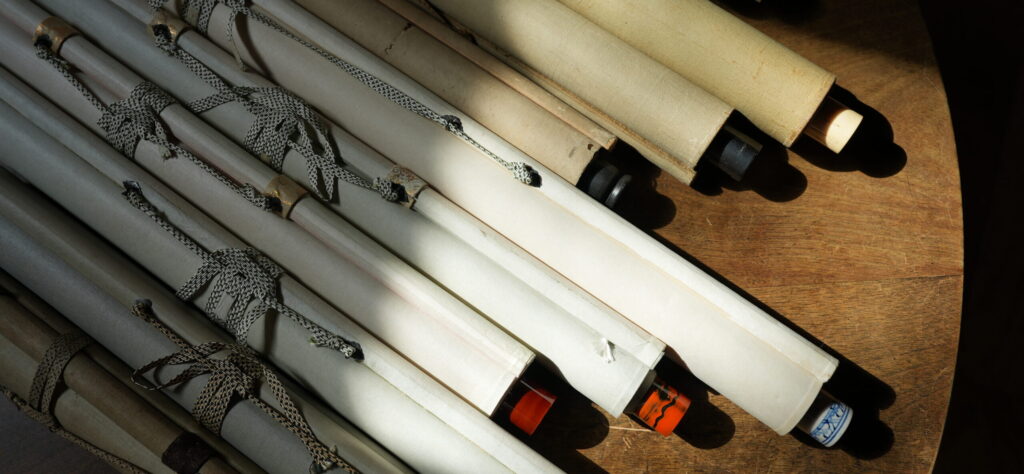
2027 Hyogu Residency
The Art of Paper Mounting and Framing
2027 Program Dates
- Spring Session: May 22nd to June 18th
- Autumn Session: October 16th to November 12th
Program Overview
Hyogu – The Art of Paper Mounting and Framing is an artist-in-residence program for artists and practitioners who wish to develop a deeper understanding of the art of hyogu and acquire the knowledge and practical skills required for kakejiku (hanging scroll) mounting. Guided by experienced hyogu mounters from the century-old mounting studio, Seikadou, participants will learn through the process of mounting two kakejiku, gaining hands-on experience with the materials, techniques, and craftsmanship involved. Artists in the program are encouraged to integrate what they learn into their future artistic practices and personal projects.
What is Hyogu?
Hyogu (表具) is the art of mounting and framing of paper-based artworks. It has been practiced in Japan since the 8th century in the realms of painting, calligraphy and prints ranging from contemporary art to historic cultural assets in the field of restoration and conservation.
The essence of hyogu lies in the harmonious combination of honshi (the main artwork) and sotei (decorative mounting) which requires the artisan’s knowledge and skills in mounting and an appreciation for aesthetics.
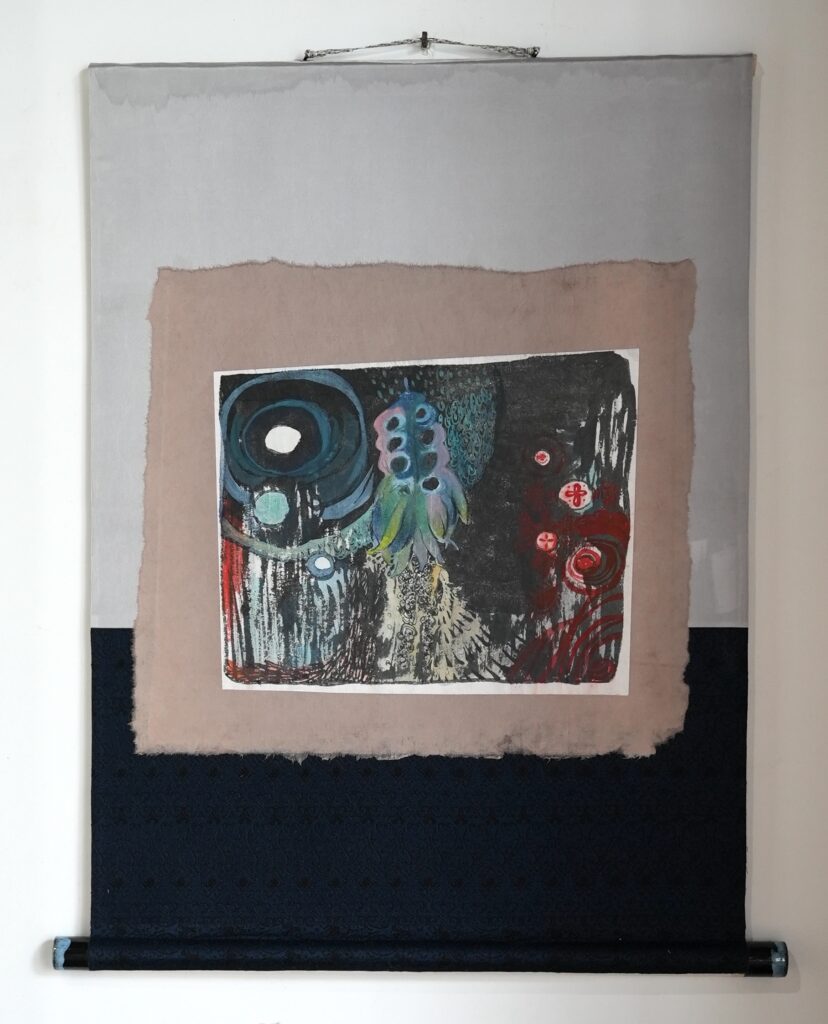
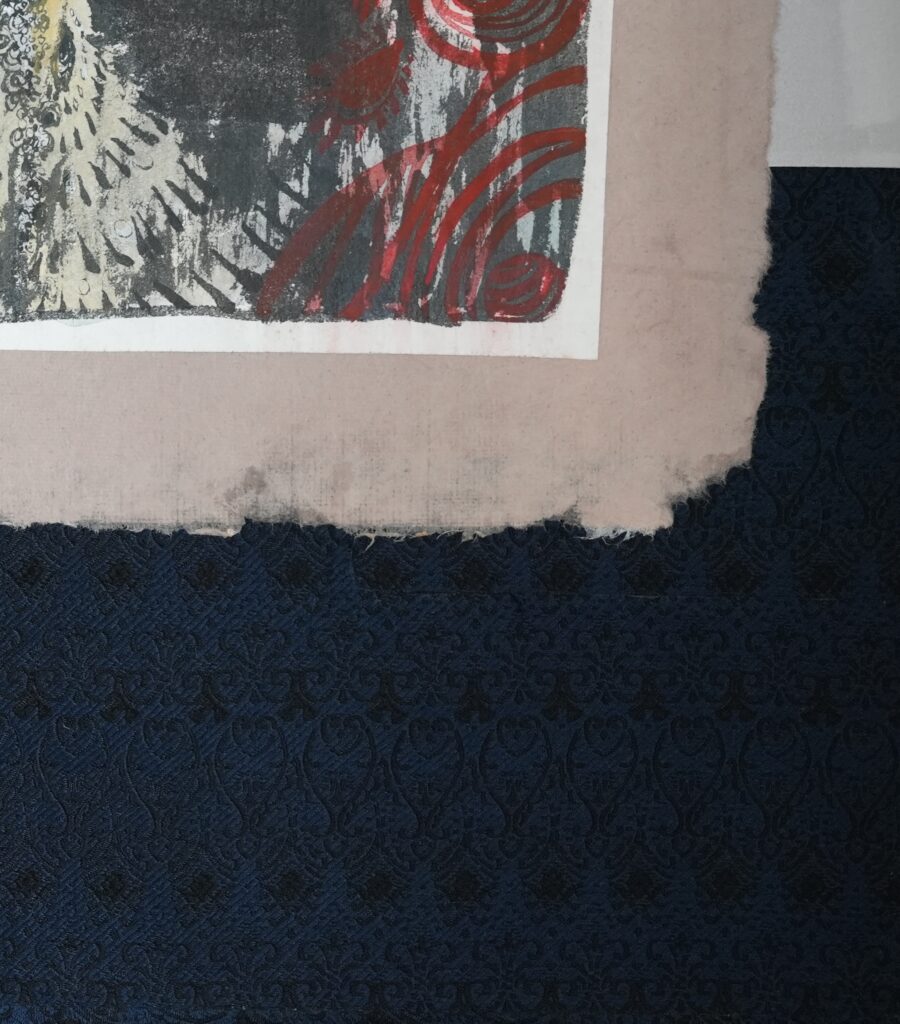
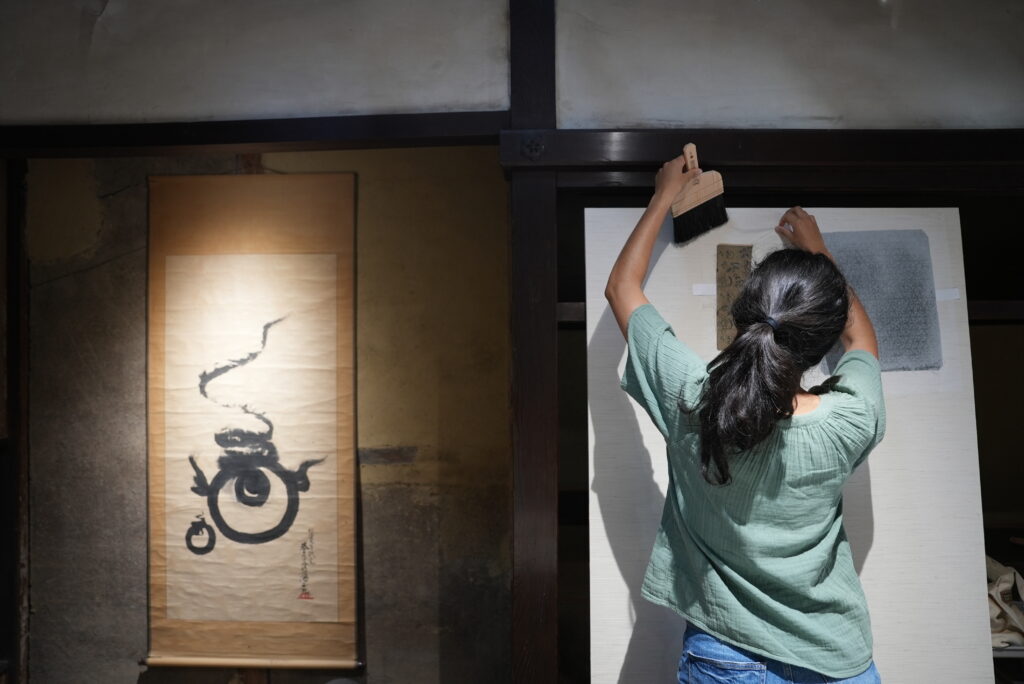
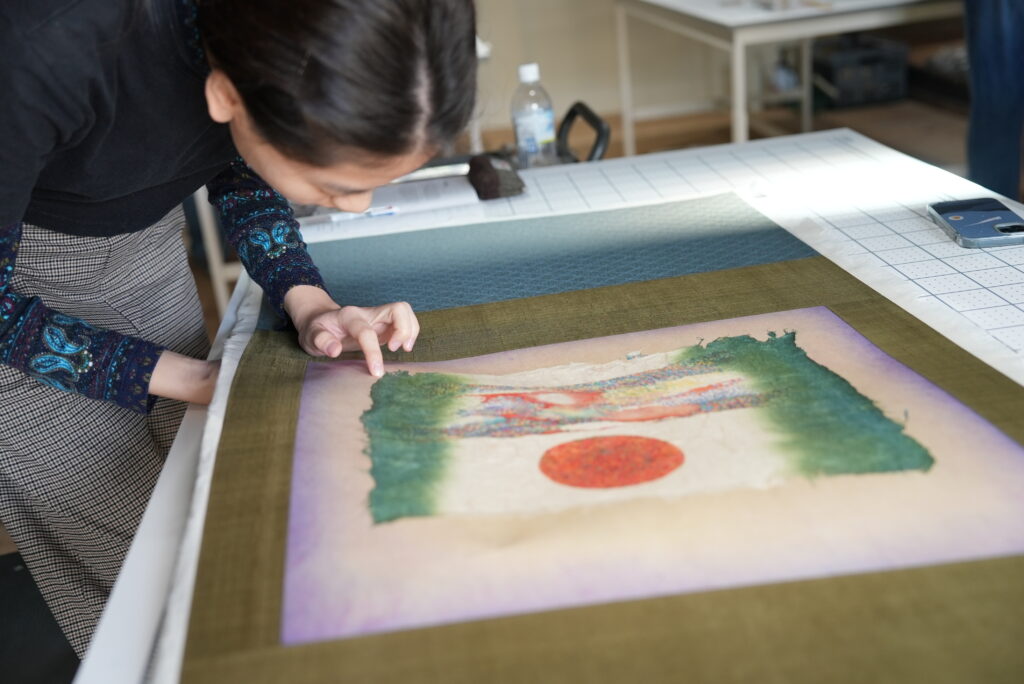
Painting and kakejiku by 2025 alumni:
Highlights
- Hyogu and Kakejiku for Artists — designed for artists and practitioners seeking both a foundational understanding of hyogu and hands-on skills in mounting kakejiku hanging scrolls.
- Guided Kakejiku Scroll Mounting Lessons — from start to finish
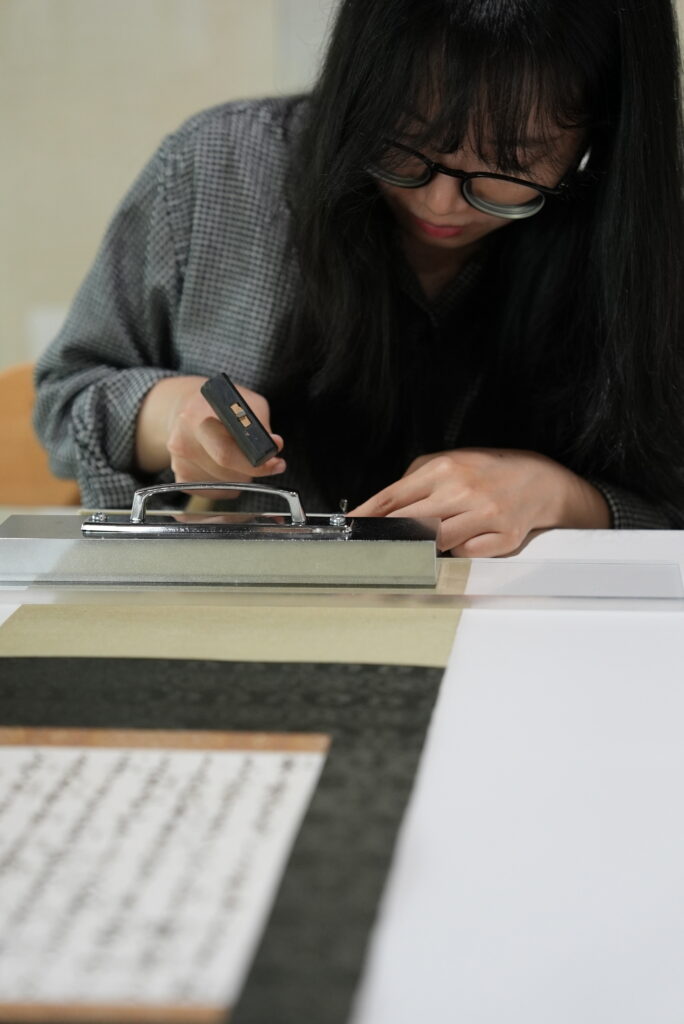
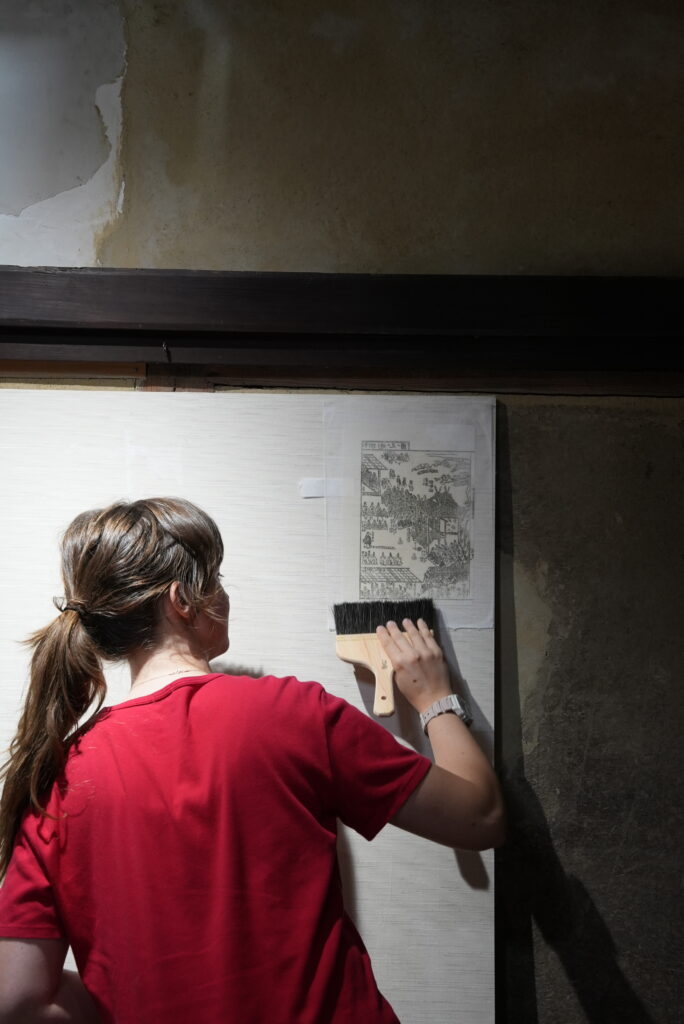
- Under the guidance of professional mounters from Seikadou, each artist will complete mounting two kakejiku with the traditional technique.
- A selection of valuable mounting materials for completing two practice pieces are included in the program
- Build a foundational knowledge in Japanese style kakejiku mounting, including the aesthetics, formats, systems, materials, tools, and the essential techniques.
- Mounting your personal artworks is possible, further instructions will be provided after enrolling the program.
- Hyogu Mounting Tools — selected by professional mounters, this valuable set of mounting tools will belong to the artist to support their future mounting practices.
- Hyogu Handbook — an English language handbook dedicated to kakejiku mounting techniques.
- Nara Paper and Sumi Ink — an exclusive opportunity to explore the paper and sumi ink crafted in Nara—both materials closely related to hyogu.
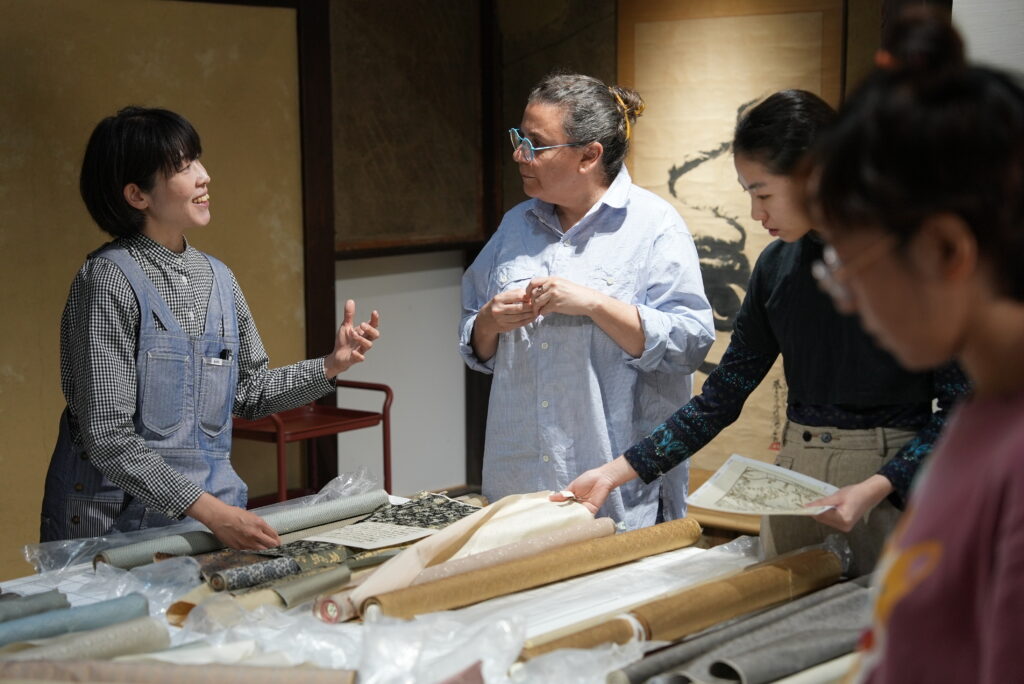
- Curated Field Trips — to local studios, suppliers, and cultural sites to deepen your understanding of hyogu and the traditional craftsmanship behind this art form.
- Dedicated Studio Environment — each artist will have a personal work desk in a shared studio, with all the necessary tools and materials to mount two kakejiku.
- 4-weeks Accommodation in Toma House AIR – Choose between staying in the 18-century registered tangible cultural property, or in the annex building next door.
This Program is For
- Artists, artisans, designers, curators, researchers, and individuals who are interested in learning the art of hyogu and kakejiku mounting techniques.
- No prior experience in hyogu is required, but a strong interest in hand mounting, mounted paper artworks or conservation is recommended.
2027 Program Fees
The program fee vary from the building/room selected, please refer to our Application Guidelines and Q7 in the FAQ section below for more details:
- Spring Session and Autumn Session:
- From 808,000 Japanese Yen for rooms in Toma Beige
- From 876,000 Japanese Yen for rooms in Toma House
- Notes for artists applying for external grants or fundings:
- Once a place is offered to you, we will be happy to provide the necessary documents to support your grant or funding application.
- As funding decisions may take a few months, we suggest applicants to prepare and submit their funding applications as early as possible.
- Room assignments are confirmed in the order of enrollments. We will do our best to accommodate grant-supported artists in their preferred rooms, however, if the preferred room has already been booked by another applicant who confirmed their enrollment earlier, there will be an alternative room option.
File: 2027 Hyogu Residency Application Guidelines
URL: https://drive.google.com/file/d/1n1k3k_SSIRETQ1JUD9W0CAdLSFySo4N1/view?usp=sharing
Application Procedure
- Please read and understand the above Application Guidelines before starting the application.
- Fill in the Online Application Form
- Spring Session: May 22nd to June 18th
- Autumn Session: October 16th to November 12th
- Application Form URL – https://docs.google.com/forms/d/e/1FAIpQLSeWNq9fBPA-SyvH3a3U5LFFBC8M_3yGlh0_nC6Yg8aFfrlYmQ/viewform
- An application confirmation e-mail will be sent to you.
- Once a place is offered to you, we will send you an Invitation Agreement, followed by the Program Invoice for enrollment
- Application Close Dates:
- Spring Session: December 30th, 2026
- Autumn Session: April 30th, 2027
- Early application is encouraged, as candidates are accessed and offered places on a rolling-basis
- Please note that in the case that both sessions become fully booked before the official close date, applications may close earlier.
Instructor Profile
SEIKADOU
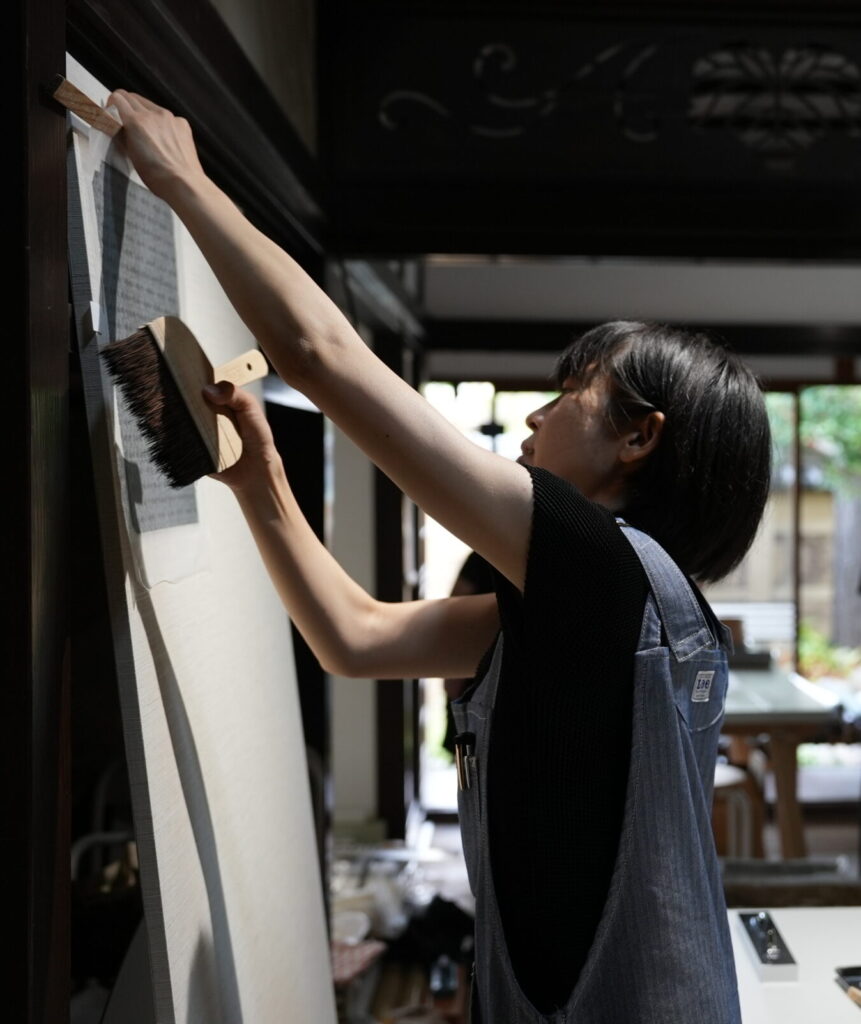
Founded in Osaka in 1923, SEIKADOU CO., LTD. is a long-established hyogu studio specializing in the mounting, conservation, and restoration of artworks and cultural materials. For over a century, SEIKADOU has worked on a wide range of projects, from traditional hanging scrolls and folding screens to temple and museum collections, as well as contemporary artworks.
As the main instructor of the program, SEIKADOU’s skilled mounters will guide participants primarily through the techniques and processes of kakejiku (hanging scroll) mounting, introducing the materials, craftsmanship, and step-by-step methods involved in its creation. While the program focuses mainly on kakejiku production, participants will also gain insight into the broader world of hyogu and the various forms of mounting, exploring how artworks and their mountings come together to form a unified work.
Alongside its conservation work, SEIKADOU is also engaged in the transmission of hyogu techniques to future generations and was selected to exhibit at Expo 2025 Osaka, Kansai, Japan.
Program Special Guest
BUNKAZAIHOZON CO. LTD.
Nara-based Bunkazaihozon Co. Ltd. is one of only ten studios in Japan accredited by the Association for Conservation of National Treasures (ACNT) to preserve and restore national treasures.
The studio specializes in restoring oriental paintings and books that are registered national treasures or significant cultural properties. They wish to impart to participants a deeper understanding of cultural properties, the importance of conservation and restoration, and the intricate structure and features behind the artworks.
https://www.kokuhoshuri.or.jp/en/kobo/bunkazai.html
Nara Sumi Ink – Artist and Instructor
CHRISTINE FLINT SATO
Christine Flint Sato is a British sumi ink painter based in Nara, the centre of sumi ink production in Japan.
Captivated by the beauty of sumi ink arts, she studied shodo (calligraphy) under Japanese calligrapher Seika Kawabe and suibokuga (ink painting) under Chinese ink painter Li Geng. Her artwork is in gallery and private collections. It is abstract and inspired by the natural world. The sumi ink medium itself is organic and vibrantly alive, offering limitless potential for exploration.
Parallel to her studio work, she researches and writes about the sumi ink arts. She is keen to share about them and their practice. She published ‘Japanese Calligraphy: The Art of Line and Space’ in 1999 and ‘Sumi Workbook’ in 2014.
In the workshop she will introduce you to core techniques based on the sumi ink art traditions, while supporting you in exploring the medium for yourself and your own artwork.
Important Notes
- Due to the competitive, rolling-based selection, we encourage early applications to secure your place.
- This is a self-funded open-call program. Participants must cover all their own expenses throughout the program.
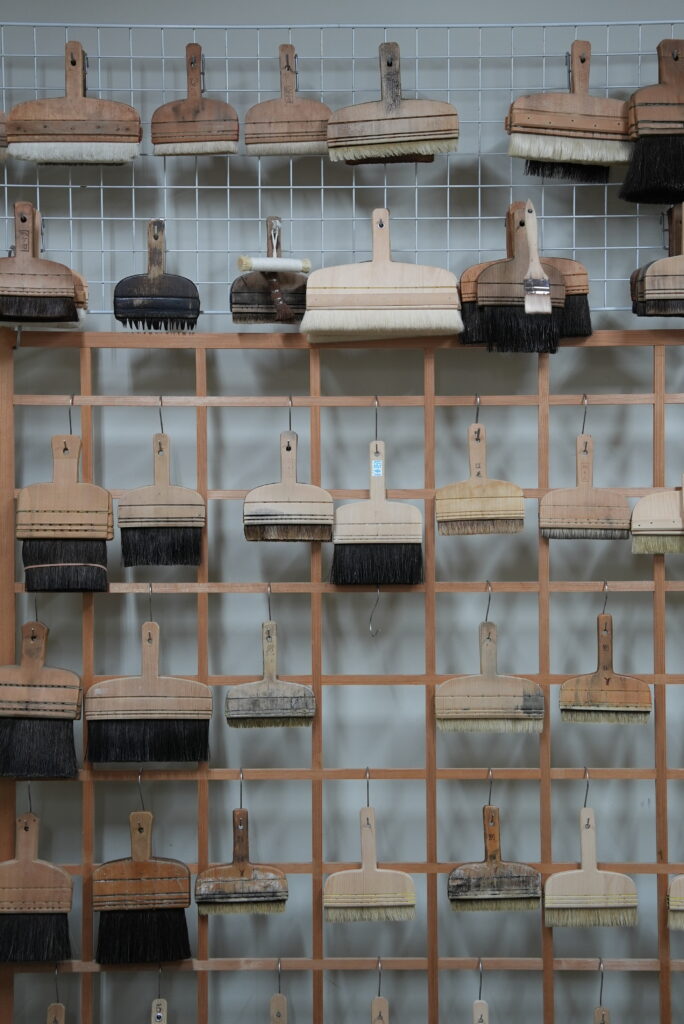
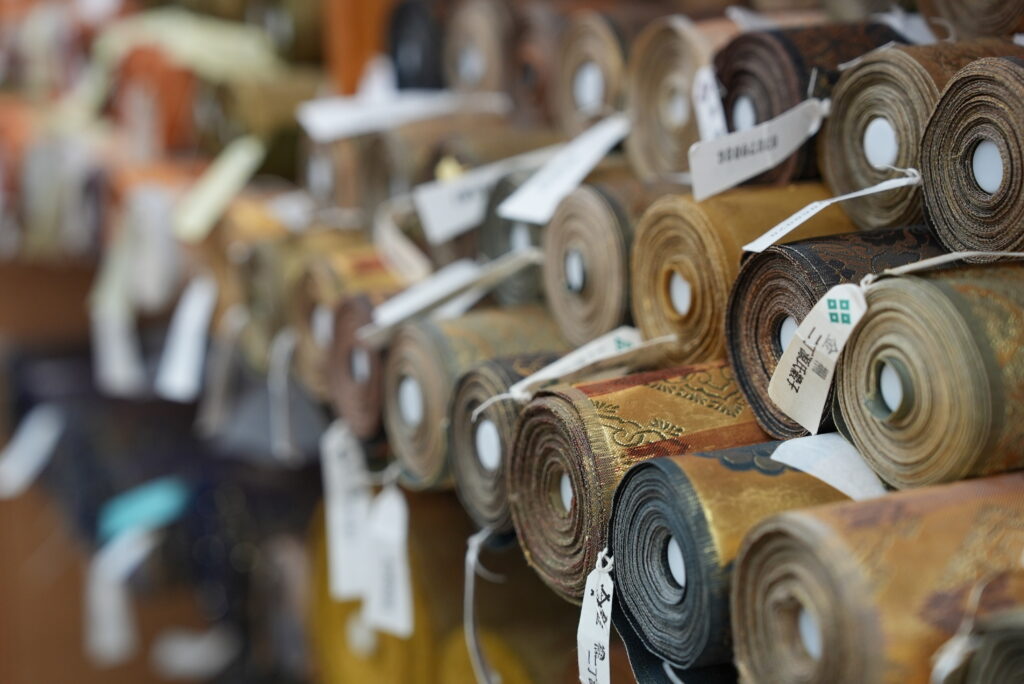
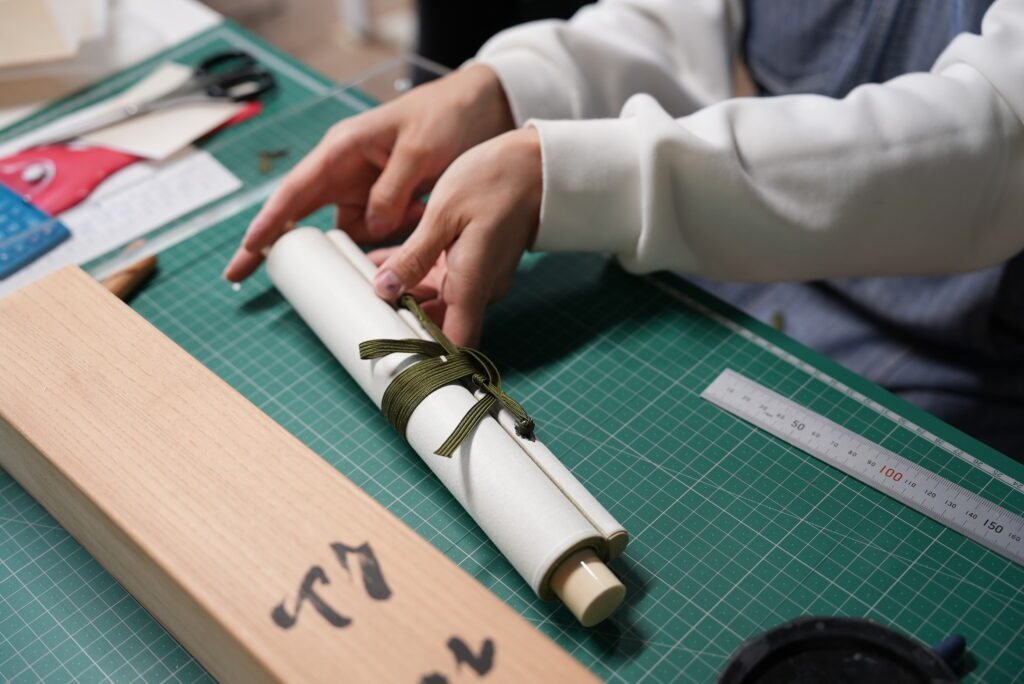
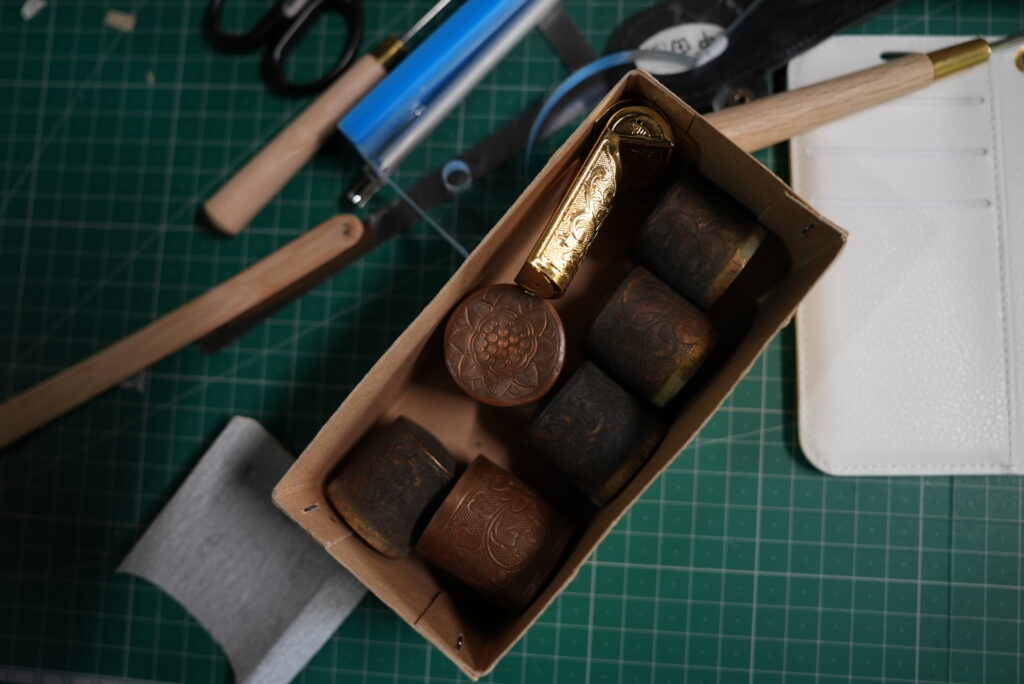
Hyogu Mounting Tools and Materials


Frequently Asked Questions
Q1: What is the program structure?
- 10 days of lessons held 2-3 times on weekdays
- 7 days of kakejiku mounting instruction
- 2 days lesson and workshop to explore Nara sumi ink painting
- 1 day special guest lecture from Bunkazaihozon
- 5 field trips related to hyogu, mounting materials, and Nara traditional crafts such as sumi ink and paper
- The remaining days are left open for rest, self-directed studio practice, and exploring Nara and its surrounding areas at your own pace.
Q2: What does the program fee cover?
- 4-week (28 days) accommodation in a private bedroom
- Shared studio, kitchen, toilet, shower, and laundry facilities
- Personal working table in a shared studio
- Kakejiku mounting instructions and lessons about hyogu by professional mounters
- A bilingual English-Japanese interpreter during lessons
- Lessons and workshops on Nara’s sumi ink painting
- Field trips
- A valuable set of hyogu mounting tools and an English-language Hyogu Handbook for kakejiku mounting
- All the necessary kakejiku mounting materials to mount two standard kakejiku
- Artworks for kakejiku mounting practice provided by Toma House AIR
Q3: What is not covered?
- Travel and transportation costs
- Food
- Insurance and visa
- Customisation of mounting parts for the artist’s own artwork – such as bigger artworks, irregular shaped artworks, antique artworks that needs treatments, etc.
- Additional mounting materials and tools for future practice – see Q4
- Personal expenses such as shopping, extra mounting materials for future use, packing and shipping fees, etc.
Q4: Where can I buy additional mounting materials or tools for my future practices?
The hyogu mounting materials provided during the program are sufficient for two standard-sized kakejiku. For artists who wish to stock up more materials for their future practices after the residency, it is possible to purchase additional materials, tools, and fabrics from Seikadou, via Toma House AIR, or from local supply shops during their stay in Japan.
Q5: How many kakejiku will I learn to mount? Do I need to bring my own artwork to practice?
During the residency, each artist will learn to mount two kakejiku:
- First scroll: a practice piece using the template artwork provided by Toma House AIR.
- Second scroll: either another template or your own work. Artists bringing their own work must ensure:
- Maximum artwork width: 600 mm
- The paper must be thin enough to be rolled-up repetitively to become a kakejiku.
- Pigments/paints that can withstand repeated soaking, gluing and drying during the mounting process.
- Further instructions will be provided after enrollment
Q6: Can I mount my own artwork or more than two artworks during the residency?
Yes you can. This program offers the materials for two pieces of standard sized kakejiku using the practice template work provided by Toma House AIR.
Any additional material costs resulting from the third work onwards, or larger dimensions, irregular shapes, or works that require maintenance or customisation will be covered by the participant and paid to Seikadou.
Q7: What are the accommodation options?
Toma House AIR is composed of two buildings sharing the same garden:
- Toma House – The 18th-century Former Priest Family House
- A Registered Tangible Cultural Property of Japan with a big studio which can serve as a classroom, gallery and performance space. This house is conserved following the traditional architecture craftsmanship specific to a Sha-ke Architecture (the traditional residence of Shinto shrine priest families), and parts of the house is still in its own cycle of restoration, for those who appreciate the beauty of an old Japanese traditional house. There are two artist bedrooms in this house.
- Toma Beige – The Annex
- A 2025 renovated annex next to Toma House. This house can host up to four artists.
- Notes:
- Please refer to the Program Guidelines for details about the bedrooms details.
- Shared facilities of two buildings include the studios, kitchens, toilets, showers and laundry facilities.
- To safeguard the historic wooden house together, all artists and visitors are required to follow our non-smoking policy and house rules.
Q8: Can I bring my partner to stay during the residency period?
Room A in Toma House is the biggest artist bedroom furnished with a semi-double bed. It is possible to bring one partner to stay in this room with an additional fee. Please inquire with us about the fee for an extra person.
Toma House AIR on social media